

Macron Defends Europe Role in Africa at Nairobi Summit
- Kenya News
OurDailyAfrica Reporter
- 0
- 10 minutes read
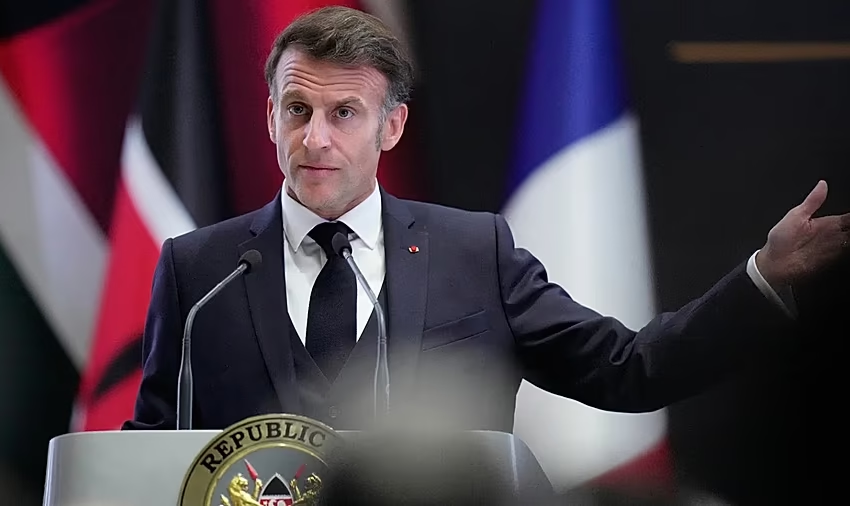
French President Emmanuel Macron has defended Europe’s relationship with Africa during the Africa Forward Summit in Nairobi. The two-day gathering brought together African leaders, investors, entrepreneurs, and global institutions. Macron used the event to promote a new partnership model between Europe and Africa. He also tried to rebuild France’s image across the continent after years of political tension in several African nations.
Macron Defends Europe Role in Africa Through New Partnerships
During the summit in Nairobi, Macron stressed that Africa and Europe should work as equal partners. He explained that both regions face common economic and security challenges. Therefore, he argued that stronger cooperation would benefit both continents.
Macron also highlighted the importance of technology, innovation, infrastructure, and trade. According to him, Europe and Africa must build “strategic autonomy” together. As a result, France wants to support African countries through investment instead of outdated political influence.
The summit marked an important diplomatic moment for France. Unlike previous France-Africa meetings, this event took place in an English-speaking African country. Consequently, analysts viewed the summit as an attempt by France to move beyond its traditional Francophone allies.
Africa Forward Summit Focuses on Investment and Growth
The Africa Forward Summit focused heavily on economic cooperation. African leaders pushed for fairer treatment in global finance systems. They argued that many African nations face unfair borrowing costs because international markets still consider the continent too risky.
Kenyan officials called for reforms in global risk assessment systems. In addition, they demanded stronger financial partnerships that could support development and job creation.
Several business agreements emerged during the summit. Reports indicated that deals worth more than $1 billion were announced or discussed. These agreements covered areas such as clean energy, transport, logistics, digital innovation, and port development.
French companies also expanded their presence in East Africa during the event. The summit attracted investors from both Europe and Africa. Therefore, leaders hoped the gathering would strengthen long-term economic ties across the continent.
France Attempts to Repair Its Image in Africa
Over the past few years, France has lost influence in parts of Africa. Several West African countries reduced military and diplomatic cooperation with Paris. In countries like Mali, Burkina Faso, and Niger, anti-French protests increased after military coups and political instability.
French military forces eventually left some of these countries. Meanwhile, other global powers increased their influence in the region. Russia and China expanded their partnerships through security cooperation, infrastructure projects, and trade agreements.
Because of these changes, Macron has tried to reshape France’s Africa policy since taking office in 2017. He repeatedly stated that the era of “Françafrique” should end. That old system often described France’s deep political and economic influence in its former colonies.
At the Nairobi summit, Macron again defended Europe’s role in Africa. However, he insisted that modern partnerships must respect African sovereignty and independence.
Kenya Becomes a Strategic Partner for France
Kenya played a central role in the summit. President William Ruto welcomed African leaders and international investors to Nairobi. Kenya positioned itself as a gateway for investment into Africa.
Unlike many former French colonies, Kenya has no colonial relationship with France. Therefore, analysts viewed the partnership as part of France’s effort to build fresh alliances in Africa.
Kenya also used the summit to promote legal and economic reforms. Government officials argued that recent reforms improved investor confidence and created better business conditions. As a result, Kenya hoped to attract more international partnerships and development funding.
During the summit, Kenyan leaders emphasized the need for fairer global financial systems. They also called for stronger African representation in international economic institutions. These discussions became one of the summit’s key themes.
Macron Defends Europe Role in Africa Against Critics
Critics have questioned Europe’s role in Africa for many years. Some African leaders and activists argue that Western countries benefited unfairly from African resources for decades. Others believe European governments supported unpopular leaders in exchange for strategic interests.
Because of this history, France faces growing criticism in parts of Africa. Nevertheless, Macron defended Europe’s engagement during the summit. He argued that Europe can still become a reliable economic and development partner for African nations.
Macron also pointed to climate cooperation, entrepreneurship, education, and technology as areas where Europe and Africa can work together effectively. Furthermore, he encouraged African and European businesses to build stronger partnerships in emerging industries such as artificial intelligence and renewable energy.
Despite criticism, France continues to see Africa as an important strategic partner. African markets remain attractive because of their growing populations, expanding economies, and rising digital innovation sectors.
African Leaders Push for Fairer Global Financial Systems
Another major topic at the summit involved global financing and debt challenges. African leaders argued that international institutions often overestimate risks in African economies. Consequently, African countries pay higher borrowing costs compared to nations with similar economic conditions elsewhere.
Leaders at the summit called for the creation of an African credit ratings agency. They believe such an agency could provide fairer evaluations of African economies.
Many African governments also want reforms in global lending systems. According to officials, better financing access would help countries invest in infrastructure, healthcare, energy, education, and industrial growth.
Macron supported discussions on improving financial access for Africa. Since France currently chairs the G7 presidency, the summit may influence future international financial debates involving African development.
The Future of Europe-Africa Relations
The Africa Forward Summit demonstrated how quickly global relationships are changing. African countries now seek more balanced international partnerships. They also want greater control over resources, stronger economic independence, and diversified alliances.
At the same time, European countries hope to maintain strong political and economic connections with Africa. France especially wants to rebuild trust after several diplomatic setbacks across the continent.
Macron’s visit to Nairobi symbolized this effort. Instead of focusing mainly on military cooperation, France promoted investment, innovation, and business development during the summit.
However, experts believe rebuilding trust will take time. African nations increasingly expect partnerships based on mutual respect and shared economic benefits. Therefore, France and Europe may need to adapt further to changing African expectations.
Still, the Nairobi summit highlighted growing interest in stronger Africa-Europe cooperation. Leaders from both continents agreed that future partnerships should focus on economic growth, innovation, youth empowerment, and sustainable development.
As global competition for influence in Africa increases, the relationship between Africa and Europe will likely remain an important issue in international politics for years to come.