

WTO Talks in Yaoundé End in Deadlock Over E-Commerce Customs Duties
- Cameroon News
OurDailyAfrica Reporter
- 0
- 10 minutes read
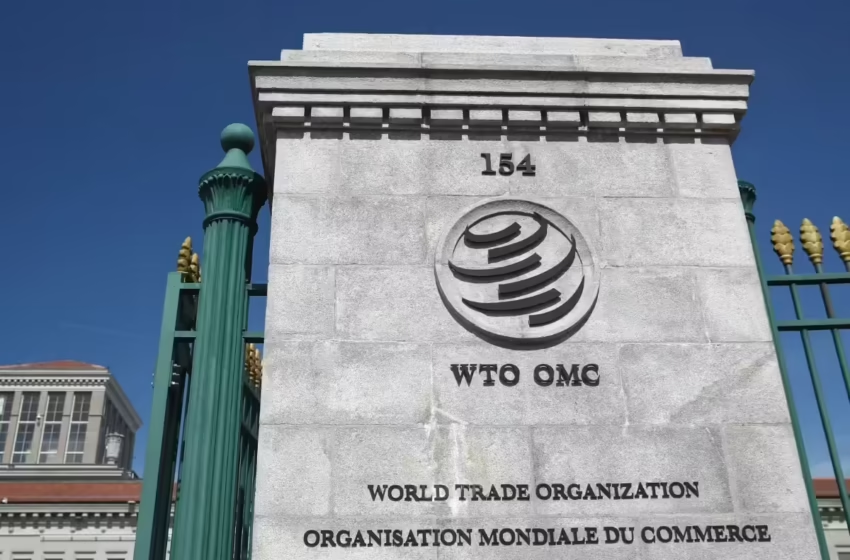
Trade negotiations involving members of the World Trade Organization have ended in a deadlock in Yaoundé after intense discussions over the future of customs duties on electronic commerce. The outcome highlights growing divisions among countries on how digital trade should be regulated and taxed in an increasingly connected global economy.
Delegates gathered with the aim of reaching consensus on whether to extend the long-standing moratorium on customs duties for electronic transmissions. However, despite several rounds of negotiations, member states failed to agree, exposing deep differences between developed and developing economies.
WTO Talks in Yaoundé Stall Over E-Commerce Customs Duties
The WTO talks in Yaoundé end in deadlock over e-commerce customs duties issue centres on a critical question. Should countries continue to allow digital goods and services to move across borders without customs duties, or should governments introduce taxes to protect revenue and local industries?
For years, WTO members have maintained a moratorium that prevents the imposition of customs duties on electronic transmissions. This policy has supported the rapid growth of digital trade worldwide.
However, some developing countries now argue that the moratorium limits their ability to generate revenue. As digital trade expands, governments worry about losing significant income that traditional goods would have generated through tariffs.
Therefore, the debate has intensified, making consensus increasingly difficult.
Divisions Between Developed and Developing Countries
The deadlock reflects a clear divide between developed and developing economies. Developed countries generally support extending the moratorium, arguing that it encourages innovation, reduces costs, and promotes global trade.
On the other hand, many developing nations believe the policy creates an imbalance. They argue that it benefits large digital economies while limiting their own fiscal options.
As a result, countries in Africa and other regions have called for greater flexibility. They want the ability to impose duties if necessary to protect their economies.
This difference in priorities played a major role in the failure of the negotiations in Yaoundé.
Economic Implications of the Deadlock
The inability to reach an agreement has significant economic implications. Digital trade continues to grow rapidly, covering services such as streaming, software downloads, and online platforms.
Without a clear global framework, countries may adopt different policies. Consequently, this could lead to fragmentation in digital trade regulations.
Businesses may face increased uncertainty as rules vary across markets. In addition, consumers could experience higher costs if new taxes are introduced.
Therefore, the lack of consensus creates challenges for both governments and the private sector.
Impact on Africa’s Digital Economy
The WTO talks in Yaoundé end in deadlock over e-commerce customs duties outcome holds particular importance for African countries. The continent’s digital economy is expanding, with increasing internet access and growing adoption of online services.
However, many African governments rely heavily on customs duties for revenue. As trade shifts from physical goods to digital services, these revenue streams may decline.
Therefore, some countries see the ability to tax digital transactions as essential. They argue that it would support development and infrastructure investment.
At the same time, others caution that imposing duties could slow digital adoption and limit innovation.
Balancing Growth and Revenue Needs
The debate highlights the challenge of balancing economic growth with revenue generation. On one hand, maintaining the moratorium supports a free and open digital economy.
On the other hand, removing it could provide governments with new sources of income.
Therefore, policymakers must carefully consider the long-term impact of their decisions. They need to ensure that policies promote both innovation and economic stability.
This balance remains at the centre of ongoing discussions within the World Trade Organization.
The Role of Global Trade Governance
The deadlock also raises questions about the effectiveness of global trade governance. The WTO plays a crucial role in facilitating negotiations and setting international trade rules.
However, reaching consensus among diverse member states has become increasingly complex. As global trade evolves, existing frameworks must adapt to new realities.
Digital trade, in particular, presents unique challenges that require innovative solutions. Therefore, the WTO must continue to engage members in dialogue to find common ground.
Future Prospects for Negotiations
Despite the deadlock, discussions are expected to continue. Member states recognise the importance of resolving the issue to ensure stability in global trade.
Future negotiations may explore compromise solutions that address the concerns of both developed and developing countries.
For example, phased approaches or conditional policies could provide flexibility while maintaining global cooperation.
Therefore, while the talks in Yaoundé did not produce an agreement, they have set the stage for further dialogue.
Broader Impact on Global Trade
The WTO talks in Yaoundé end in deadlock over e-commerce customs duties situation reflects broader changes in global trade. As economies become more digital, traditional trade rules face increasing pressure.
Countries must adapt to new forms of commerce while ensuring fairness and sustainability. This transition requires collaboration and innovation at the international level.
Therefore, the outcome of future negotiations will play a key role in shaping the future of global trade.
Conclusion
The failure of WTO talks in Yaoundé to reach agreement on e-commerce customs duties highlights the complexity of regulating digital trade. It reveals deep divisions between countries with different economic priorities and development needs.
While developed nations emphasize growth and innovation, developing countries focus on revenue and economic protection. As a result, finding common ground remains challenging.
However, continued dialogue offers hope for a balanced solution. By addressing the concerns of all stakeholders, the global community can create a framework that supports both digital growth and economic sustainability.
Ultimately, the deadlock underscores the need for cooperation in an increasingly interconnected world, where digital trade continues to redefine the global economy.