
West African Anti-Jihadist Force: ECOWAS Plans Regional Security Strategy
- Burkina faso Ghana Ginea Guinea bissau Ivory Coast News Nigeria
OurDailyAfrica Reporter
- 0
- 12 minutes read
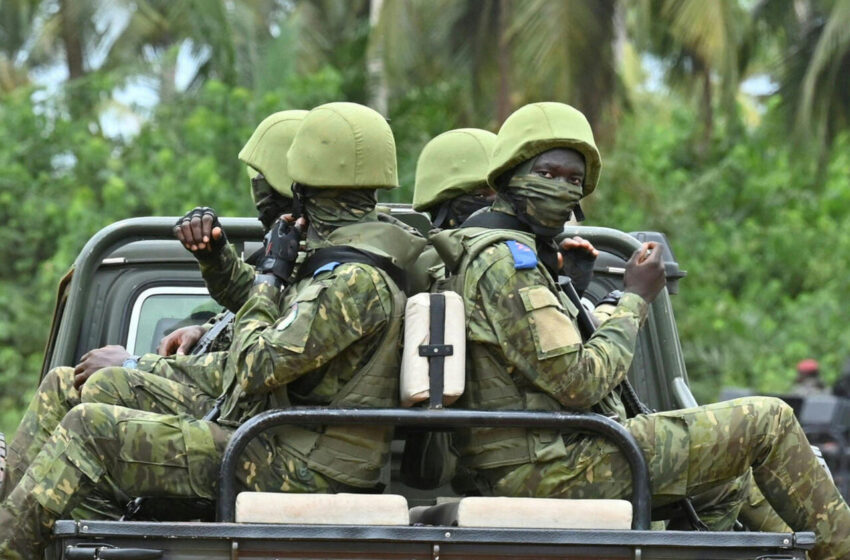
Ivorian soldiers drive on the back of a vehicle outside the International Academy for Combating Terrorism (AILCT) in Jacqueville in Ivory Coast on June 10, 2021. – The creation of the AILCT in a West Africa where several countries are plagued by jihadist attacks – Al-Qaeda in the Islamic Maghreb (Aqmi), Islamic State (EI), Boko Haram – had been formalized in November 2017 by French President Emmanuel Macron and Ivorian President Alassane Ouattara, on the sidelines of a summit between the African Union (AU) and the European Union (EU) in Abidjan. (Photo by Issouf SANOGO / AFP)
West African leaders are taking decisive steps to strengthen regional security as extremist violence spreads across the region. Member states of the Economic Community of West African States are preparing to establish a West African anti-jihadist force designed to combat terrorism and organised crime.
The initiative reflects growing concern about instability across the Sahel and coastal regions. Governments increasingly recognise that terrorism threatens economic development and public safety. Therefore, regional cooperation has become a strategic priority.
Military planners believe a coordinated security framework will improve intelligence sharing and strengthen operational responses. The proposed force represents a major shift toward African-led security solutions.
The Need for a West African Anti-Jihadist Force
The decision to create a West African anti-jihadist force followed consultations among military leaders who assessed the region’s deteriorating security conditions. Extremist groups continue to expand their activities across national borders. As a result, individual countries struggle to respond effectively.
Terrorist organisations exploit weak border controls and remote territories. Consequently, militants move easily between countries while avoiding national security forces. This mobility allows extremist networks to maintain influence across large areas.
For more than a decade, terrorist violence has destabilised several West African states. Communities continue to face attacks on villages, transport routes, and public institutions. These threats have forced many families to abandon their homes.
Moreover, insecurity has weakened local economies. Farmers often cannot access their fields, while traders face dangerous travel conditions. Therefore, regional stability remains essential for economic recovery.
Security analysts agree that isolated national strategies cannot defeat cross-border terrorism. A unified military response offers stronger protection and improved coordination.
Structure of the West African Anti-Jihadist Force
The proposed West African anti-jihadist force is expected to begin with approximately 2,000 troops drawn from participating countries. Each nation will contribute personnel while maintaining national command over its forces.
Unlike traditional multinational deployments, troops will remain based in their home countries. However, they will operate under a coordinated framework that allows rapid deployment when threats emerge.
Military planners expect this approach to reduce costs and increase flexibility. At the same time, the structure will allow faster responses to emergency situations.
Sierra Leone is expected to serve as a major logistical centre for the operation. This arrangement will support communication, planning, and coordination among member states.
In addition, intelligence sharing will form a central part of the initiative. Security agencies will exchange information on extremist movements and criminal networks.
Improved intelligence cooperation should help authorities prevent attacks before they occur.
Rising Security Threats in West Africa
Extremist violence continues to spread across West Africa despite ongoing military operations. Armed groups operate across wide territories and target both civilians and security forces.
Several Sahel countries have experienced persistent instability. Armed groups often attack remote communities where government presence remains limited.
Furthermore, militants continue expanding toward coastal states. This development has raised serious concerns among governments in the region.
Security experts warn that extremist groups aim to control trade routes and rural territories. These areas provide resources and strategic advantages.
As a result, governments now see regional cooperation as essential for long-term stability.
The West African anti-jihadist force aims to disrupt extremist networks and restore government authority in vulnerable areas.
Political Challenges Facing Regional Cooperation
Although the security threat affects the entire region, political differences present significant challenges.
Some Sahel countries have reduced cooperation with regional organisations following recent political changes. These divisions complicate joint military planning.
However, security officials continue encouraging cooperation across all affected states. Military leaders understand that terrorism does not respect political boundaries.
Therefore, long-term success depends on wider regional collaboration.
Despite political tensions, the proposed force demonstrates a shared commitment to fighting extremism.
The West African anti-jihadist force could eventually serve as a platform for broader security cooperation across the region.
Organised Crime and Cross-Border Threats
Security challenges in West Africa extend beyond terrorism. Organised crime networks operate across national borders and support extremist activities.
Criminal groups engage in smuggling, illegal mining, and human trafficking. These activities provide funding for armed groups and weaken state authority.
Illegal trade routes connect coastal ports with conflict zones in the interior. Consequently, weapons and supplies move easily across the region.
A coordinated security approach could disrupt these networks.
The West African anti-jihadist force will support efforts to monitor borders and strengthen law enforcement cooperation.
Improved border control will help reduce the movement of weapons and fighters.
Funding and Operational Considerations
Despite strong political support, several issues remain under discussion.
Funding represents one of the most important challenges facing the West African anti-jihadist force. Member states must agree on financial contributions and long-term sustainability.
Large-scale security operations require consistent funding. Without reliable resources, military coordination becomes difficult.
Governments must balance security needs with economic realities. Many countries already face budget pressures and development challenges.
Operational planning also requires careful coordination. Military leaders must define command structures, communication systems, and deployment procedures.
Effective planning will determine the success of the initiative.
A New Approach to Regional Security
The West African anti-jihadist force represents a new direction in regional security policy. West African governments are increasingly taking responsibility for their own defence strategies.
In the past, many countries depended heavily on foreign military support. However, changing political conditions have encouraged greater regional independence.
African-led solutions may provide more sustainable results.
Regional cooperation can strengthen trust among governments while improving security outcomes.
If implemented successfully, the force could improve stability across large parts of West Africa.
Future Outlook
Security analysts believe the West African anti-jihadist force could transform counterterrorism efforts in the region.
Better coordination will allow faster responses to emerging threats. Improved intelligence sharing will strengthen prevention strategies.
Furthermore, stronger security may encourage economic investment and development.
However, political unity and financial commitment remain essential.
Without sustained support, progress could slow.
Nevertheless, the initiative shows clear determination among West African leaders to confront insecurity together.
Conclusion
The creation of a West African anti-jihadist force marks a significant step toward stronger regional security cooperation. Governments increasingly understand that terrorism and organised crime require a coordinated response.
The initiative offers hope for improved stability across West Africa. With proper funding and cooperation, the force could protect communities and strengthen national institutions.
A united approach may provide the best chance to defeat extremism and secure a safer future for the region.