
UN decries crackdown on opposition ahead of Ugandan elections
- Kenya News
OurDailyAfrica Reporter
- 0
- 7 minutes read
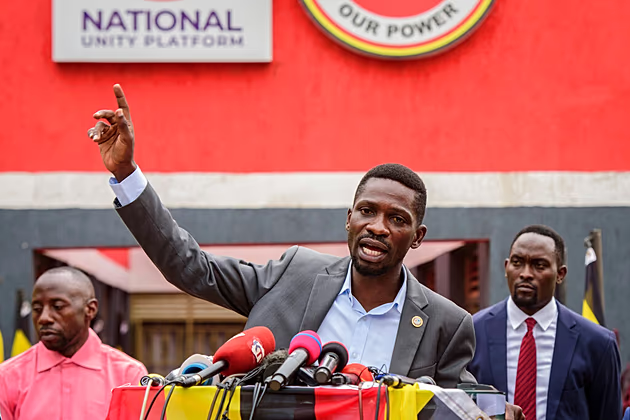
The international community has turned a sharp spotlight on Uganda. The United Nations (UN) publicly condemned a mounting crackdown on opposition figures, protestors, and independent media. The warning comes days before national elections, raising serious doubts about the vote’s fairness. Thousands reportedly face arrest, while journalists suffer repression. As a result, the election now risks losing legitimacy in the eyes of many Ugandans and global observers.
Arrests, detentions and intimidation of opposition supporters
Since the start of the election campaign, numerous members and supporters of opposition parties have been detained by security forces. Reports indicate many arrests occurred without proper procedures. People have been held without formal charges. Some were released only after long interrogations. Others remain in custody under unclear circumstances. This pattern has sparked widespread fear and discouragement among opposition supporters.
In addition, activists report heavy use of force during protests. Demonstrations that sought to express political dissent frequently end with violent dispersal by police. Many protestors describe chaotic scenes — tear gas, beatings, and arrests. As a result, public gatherings, rallies, and opposition rallies have sharply declined. This environment undermines free political expression right before the vote.
Media suppression and shrinking civic space
Independent journalists and media outlets now face serious constraints. Authorities have restricted reporting in many regions. Some media houses have been raided, while others received threats. Several correspondents complain of harassment, intimidation, and even temporary arrests. As a result, citizens struggle to access impartial news. Without independent reporting, the public lacks reliable information on candidates, platforms, and electoral irregularities.
Digital platforms and social media have not escaped these efforts. Online coverage of protests and electoral developments came under pressure. Some opposition voices reported blocked accounts or sudden shutdown of their content. This strategy appears designed to limit dissent and control narratives as elections near.
Consequently, civil society warns that Uganda’s democratic space is rapidly shrinking. Citizens now face severe obstacles to staying informed, engaging publicly, or choosing alternative political paths. Many say the environment feels hostile and unsafe. As a result, voter engagement and confidence may drop drastically.
Threat to fair elections and democratic legitimacy
The repressive environment raises fundamental questions about electoral integrity. When opposition parties cannot operate freely or campaign, voters lack real choices. When the media cannot report freely, transparency vanishes. When citizens fear harassment for political activity, participation suffers. In this scenario, election results — even if declared — risk heavy contestation.
Moreover, the use of arbitrary arrests and force against peaceful demonstrators violates human rights norms. Observers argue that such acts undermine not only this election but future governance. Already, trust in institutions — including electoral bodies and law enforcement — eroded drastically. Many fear that even elections held under pressure will fail to reflect the true will of the people.
UN demands accountability, respect for rights and electoral safeguards
Responding to growing concern, the UN issued a firm statement calling for immediate action. It urged Ugandan authorities to:
- release political detainees held without due process
- guarantee safe space for campaign rallies, protests, and public assembly
- allow independent media to operate without harassment
- ensure that elections occur under free, fair, and transparent conditions
The UN also called on election observers — domestic and international — to monitor the process closely. It emphasized that any further abuses must be documented and perpetrators held accountable. The group argued that only impartial election monitoring can restore confidence in the vote’s legitimacy.
In parallel, regional and civil society groups echoed those demands. They cautioned that continued repression would fuel distrust, potential conflict, and even long-term instability. They urged government and security agencies to respect civil and political rights, ahead of and after elections.
What’s at stake for Ugandans and the country’s future
The coming election represents a critical moment for Uganda’s democracy. Citizens hope for renewed leadership, fair representation, and stable governance. Yet the current crackdown threatens to turn the vote into a hollow exercise rather than a genuine democratic renewal.
If repression continues, many voters may abstain in fear. Opposition parties may boycott or challenge results. International donors and partners may reconsider cooperation. Social tensions — already high — may flare. In that context, the election could deepen division rather than unify the nation.
On the other hand, if authorities heed warnings and guarantee free space for politics, Uganda may salvage credibility. Transparent, fair elections could restore trust. Independent media and civil society engagement might reinvigorate civic participation. Ultimately, the country’s democratic future hangs in the balance.
Conclusion: Urgent call for respect of rights and democratic norms
The UN’s condemnation reflects a serious warning. The crackdown on opposition, protesters, and journalists undermines the foundation of credible elections. For Ugandans, this moment must prompt urgent action. Authorities need to uphold human rights, allow civic freedom, and ensure the vote reflects the people’s will. Otherwise, the elections risk becoming a facade — triggering profound mistrust and long-lasting damage to democracy.
Ultimately, the world — and Ugandans themselves — will be watching. If rights are respected and safeguards implemented, this election could still deliver hope and renewal. If not, the cost may prove high for Uganda’s democratic dreams.