
Son of Moammar Gadhafi, Saif al-Islam, Killed in Libya
- Libya News
OurDailyAfrica Reporter
- 0
- 5 minutes read
Saif al-Islam Gadhafi Killed in Libya
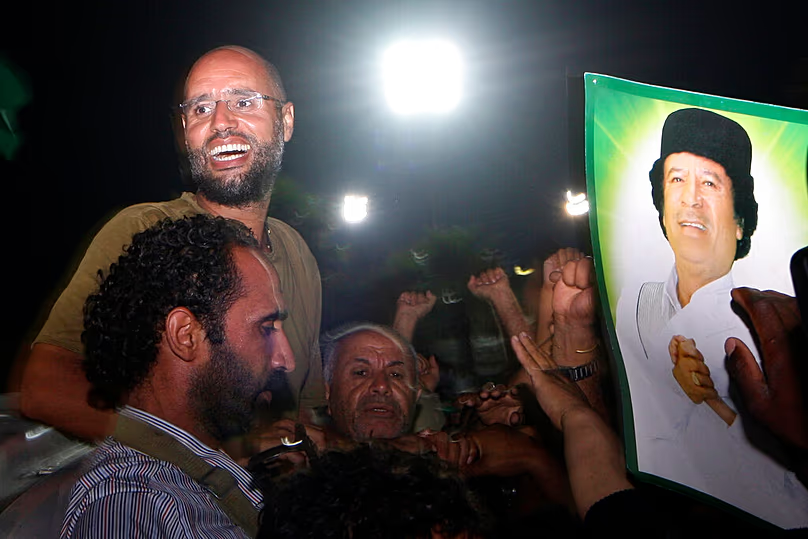
Saif al-Islam Gadhafi, the son of Libya’s former leader Moammar Gadhafi, has been killed in the town of Zintan, Libya. Officials confirmed the incident, stating that armed assailants targeted him at his residence. Investigations into the attack are ongoing, but authorities have not yet released details regarding the perpetrators or motives.
The 53-year-old had long been a prominent figure in Libya’s political landscape. His death marks a critical moment in a country still struggling with fragmentation, insecurity, and contested governance more than a decade after the fall of the Gadhafi regime.
Life and Political Career of Saif al-Islam Gadhafi
Born in Tripoli in 1972, Saif al-Islam Gadhafi earned a PhD from the London School of Economics and initially emerged as a reform-minded member of his father’s government. He played a visible role in diplomatic and economic initiatives, often serving as the public face of Libya’s modernization efforts before 2011.
During the 2011 uprising, Saif al-Islam defended his father’s government and became associated with efforts to suppress mass protests. After the collapse of the regime, he attempted to flee but was captured by fighters in western Libya. He spent several years in detention and was later released under a general amnesty.
Despite a prior death sentence in absentia for alleged crimes against protesters and an outstanding International Criminal Court warrant, Saif al-Islam sought a political comeback. His attempt to run for president in 2021 was blocked, highlighting the controversial nature of his public profile and the continued divisions in Libyan politics.
Impact on Libya’s Political and Security Landscape
The killing of Saif al-Islam Gadhafi removes a symbolic figure whose presence had both divided and mobilized Libyan factions. His death underscores the fragile security situation, with armed groups continuing to control multiple regions.
Libya remains politically fragmented, with rival administrations and militias competing for influence. National elections have been repeatedly postponed, and efforts to unify institutions are ongoing but slow. Analysts note that the killing could heighten tensions and complicate reconciliation efforts between competing political actors.
Legacy and Controversy
Saif al-Islam’s life reflected Libya’s complex post-Gadhafi era. Once seen as a potential reformer, he became a polarizing figure after defending the former regime. His political and legal struggles, including imprisonment and disqualification from national elections, kept him in the public eye for over a decade.
His death highlights ongoing challenges in Libya, including political instability, security gaps, and governance weaknesses. While his removal may resolve certain power dynamics, it does not address the structural issues that continue to affect the country.
Looking Forward
Authorities have called for calm as investigations continue. Saif al-Islam Gadhafi’s death is expected to influence Libya’s political trajectory, but sustainable peace will require systemic reforms. Experts suggest that inclusive dialogue, strengthened state institutions, and security sector improvements are critical for long-term stability.
The incident also serves as a reminder of the enduring volatility in Libya, where high-profile figures remain vulnerable, and political fragmentation persists. The country’s path toward unity, governance reform, and security remains challenging, even as the international community watches closely.