

Prominent Tunisian Opposition Figure Arrested at Protest in Capital
- News Tunisia
OurDailyAfrica Reporter
- 0
- 11 minutes read
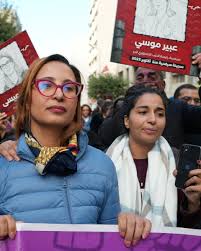
Prominent Tunisian Opposition Figure Arrested at Protest in Capital Amid Rising Tensions
A leading voice in Tunisia’s political opposition, Chaima Issa, was arrested in the capital, Tunis, during a protest calling for the restoration of democratic freedoms and an end to what many citizens describe as a growing climate of repression. Her arrest has reignited public debate over the state of civil liberties, judicial independence, and political accountability in the country.
Eyewitnesses reported that police officers moved into the crowd shortly after Issa addressed protesters, urging them to remain united in the face of what she labelled an “escalating assault on freedom.” Moments later, officers escorted her away under heavy security, sparking anger among demonstrators and intensifying calls for nationwide action.
Issa had earlier stated that she expected to be detained following a controversial court ruling that imposed long prison sentences on numerous opposition leaders, lawyers, business figures, and activists. These sentences — some reaching 45 years — were handed down after accusations that the group conspired to undermine the Tunisian state. Critics argue that the allegations are politically engineered to silence dissent.
Opposition Crackdown Deepens
The arrest comes amid what observers describe as a deepening crackdown on opposition voices. Over the past months, several prominent politicians, attorneys, journalists, and civil-society leaders have been detained or charged with offenses tied to national security, conspiracy, and threats to public order.
Human rights organisations have condemned the trials as unfair, opaque, and politically motivated. They argue that the judicial process has been weaponized to target those who challenge the government’s direction.
Chaima Issa, known for her outspoken defence of democratic governance, has long criticized policies she believes erode Tunisia’s hard-earned freedoms. Her 20-year sentence — delivered as part of the mass trial — has raised serious questions about the independence of the judiciary and the growing influence of executive power.
Analysts warn that the heavy-handed approach taken by authorities may further alienate the public while also provoking stronger resistance from political activists and civil society groups.
Why Tunisians Are Protesting
The protest where Issa was arrested was part of a larger movement responding to the recent court verdicts. Thousands of Tunisians have taken to the streets to voice their outrage at what they call abuses of power. Their demands include:
- Restoration of democratic safeguards
- Release of political prisoners
- Protection of civil liberties
- An end to politically influenced trials
Protesters argue that Tunisia, once celebrated as the success story of the Arab Spring, is now sliding backward into authoritarianism.
Many civil-society groups have highlighted the impact these developments may have on upcoming political reforms, elections, and Tunisia’s international partnerships. Critics fear that further repression could isolate the country diplomatically and worsen its economic challenges.
A Symbol of Resistance
Chaima Issa’s arrest has elevated her status as a symbol of resistance among citizens who oppose the current political direction. Her speeches — often focused on accountability, freedom, and transparency — resonate strongly with young Tunisians who feel frustrated and marginalized.
Before her arrest, she urged the crowd not to retreat in the face of pressure. She reiterated that the struggle for political freedom requires collective resolve and the refusal to accept fear as a norm.
Her words echoed across the capital as people chanted in solidarity, calling for an end to growing state intimidation.
Mounting Concerns for Tunisia’s Future
Observers warn that the situation poses a critical test for Tunisia’s democratic trajectory. The political environment has become increasingly polarized, with the government defending its actions as necessary to preserve stability, while opponents accuse leaders of dismantling institutions meant to safeguard rights.
Several issues deepen the concern:
1. Shrinking civic space
Non-governmental organisations report that public gatherings, political activities, and media operations are facing greater restrictions, limiting their ability to operate independently.
2. Rising fear of political retaliation
Opposition members and human-rights defenders say they fear arrest for expressing views that challenge the state narrative.
3. Declining public trust
Many Tunisians believe the judiciary is no longer impartial, making it difficult to ensure fair trials for accused individuals.
4. Economic hardship
With unemployment high and inflation rising, political unrest risks worsening the already fragile economic outlook.
These factors, combined with prominent arrests like Issa’s, contribute to an atmosphere of tension and distrust.
Opposition Leaders Call for Unity
In response to Issa’s detention, several opposition groups have released coordinated statements urging citizens to stand united against the erosion of freedoms. They argue that only a unified front can prevent the further disintegration of the country’s democratic achievements.
They stress that the arrests are intended to intimidate critics and deter public mobilisation, but insist the strategy will not succeed if Tunisians remain resolute.
Civil-society organisations have also renewed calls for international actors to monitor the situation more closely, urging diplomatic partners to advocate for human rights and the rule of law.
Public Reactions and Continuing Demonstrations
Following Issa’s arrest, spontaneous demonstrations erupted across multiple districts in Tunis. Protesters marched through major streets holding banners demanding justice and chanting slogans celebrating resistance. Security forces increased their presence, but demonstrations have continued despite attempts to disperse them.
Activists say they will not be deterred by threats of additional arrests. They insist that defending democratic freedoms is a duty owed to future generations and to the legacy of the 2011 revolution.
Conclusion: A Critical Turning Point
The arrest of a prominent Tunisian opposition figure has become a defining moment in the country’s political journey. It symbolizes a deepening confrontation between a government determined to consolidate power and a population unwilling to abandon its democratic aspirations.
As Tunisia navigates this turbulent period, its future will depend heavily on the resolve of its citizens, the strength of its institutions, and the ability of political actors to re-establish trust, fairness, and constitutional principles.
The world now watches closely to see whether Tunisia will resist authoritarian tendencies or continue down a path that could jeopardize its democratic foundations.