

New Cross Fire Anniversary: Remembering the Lives Lost and the Justice Denied
- News
OurDailyAfrica Reporter
- 0
- 10 minutes read
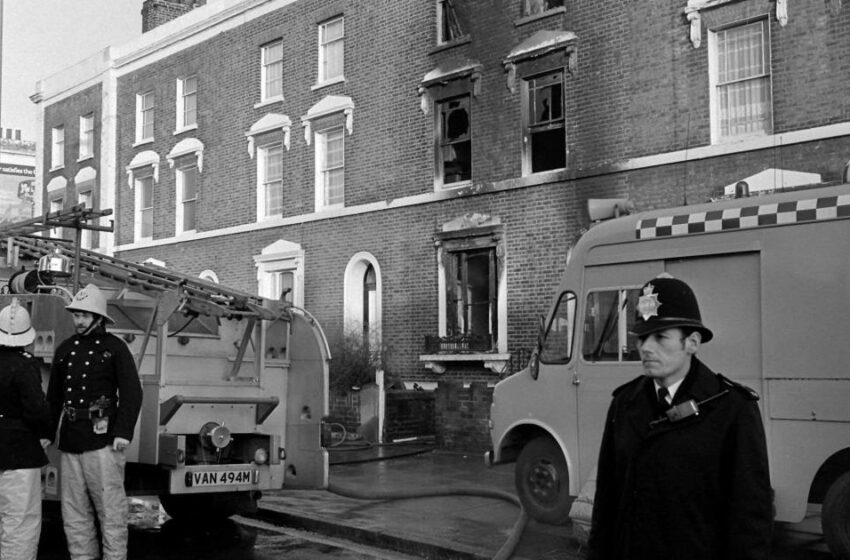
The New Cross Fire anniversary marks one of the most painful and unresolved tragedies in Black British history. On 18 January, forty-five years after the disaster, families, activists, and communities continue to honour the young lives lost and to demand justice that has never arrived.
In 1981, a house fire in New Cross, South London, erupted during a birthday celebration. Thirteen young Black people, aged between 14 and 22, lost their lives. A fourteenth survivor later died by suicide after struggling with long-term trauma. What should have been a joyful gathering became a national symbol of grief, racial injustice, and institutional failure.
More than four decades later, the tragedy remains officially unresolved. No one has been charged. No one has been held accountable. Yet the memory of the New Cross Fire endures, carried forward by collective remembrance and resistance.
The New Cross Fire and Its Historical Context
To understand the significance of the New Cross Fire anniversary, it is essential to examine the social and political climate of Britain in the early 1980s.
At the time, Black communities faced rising racism, aggressive policing, and growing far-right activity. Racist attacks were increasingly common, while political rhetoric openly questioned the presence of Black people in Britain. Slogans such as “Keep Britain White” reflected a hostile national mood that many Black families experienced daily.
Against this backdrop, the fire in New Cross did not occur in isolation. Many within the Black community believed the blaze was a racist arson attack. This belief stemmed not only from eyewitness accounts and inconsistencies in the investigation, but also from the wider pattern of racial violence and neglect during that period.
Despite these concerns, authorities failed to treat the incident with urgency or transparency. From the very beginning, mistrust defined the relationship between grieving families and the institutions meant to protect them.
Lives Cut Short in New Cross
The victims of the New Cross Fire were young. They were students, workers, siblings, and friends. They were children with futures ahead of them.
Their deaths devastated families and shocked Black communities across Britain. However, the official response failed to reflect the scale of the loss. Public empathy was limited. Media coverage was inconsistent and, at times, dismissive.
Rather than centring the victims, attention shifted quickly away from their lives and toward silence. As a result, families were left to grieve without closure, support, or answers.
The lack of accountability deepened the pain. It also reinforced a wider perception that Black suffering did not carry the same weight within British society.
Justice Denied and Institutional Failure
Forty-five years on, the New Cross Fire anniversary continues to highlight the issue of justice denied.
Despite multiple investigations and reviews, the case remains unresolved. No criminal responsibility has been established. No official acknowledgment of wrongdoing has been made.
This failure has long been viewed as part of a broader pattern. For many Black Britons, the handling of the New Cross Fire reflected systemic inequality within policing, the legal system, and public institutions.
When justice is delayed indefinitely, it becomes justice denied. The absence of answers has left families trapped between grief and uncertainty, unable to fully heal.
Moreover, the lack of accountability sent a clear message at the time: that Black lives were not afforded equal concern or protection under the law.
The Black People’s Day of Action
In response to silence and neglect, the community organised.
On 2 March 1981, more than 20,000 people marched through London in what became known as the Black People’s Day of Action. Protesters demanded justice for the New Cross victims and challenged the unequal treatment of Black communities across Britain.
The march marked a turning point in Black British political activism. It demonstrated collective power, unity, and refusal to be ignored.
Importantly, the protest shifted the narrative. It forced national attention onto racial injustice and exposed the deep frustrations that had long been overlooked.
The Black People’s Day of Action remains one of the most significant protests in modern British history. It transformed grief into resistance and memory into mobilisation.
Why the New Cross Fire Anniversary Still Matters
The New Cross Fire anniversary is not only about remembering the past. It is about understanding the present.
Many of the issues highlighted by the tragedy remain unresolved today. Disproportionate policing, racial inequality, and institutional mistrust continue to affect Black communities across the United Kingdom.
By remembering the New Cross Fire, society is forced to confront uncomfortable truths about whose lives are valued and whose voices are heard.
Remembrance becomes an act of resistance when justice is denied. It challenges silence and demands accountability.
Memory, Resistance, and Collective Healing
For families and communities, remembering the New Cross Fire is deeply personal. It is about honouring children who never had the chance to grow older.
At the same time, remembrance serves a broader purpose. It preserves historical truth and resists erasure.
Through annual commemorations, storytelling, and education, the legacy of the New Cross Fire continues to shape conversations about race, justice, and belonging in Britain.
These acts ensure that the victims are not reduced to statistics. Instead, they remain central to a wider struggle for dignity and equality.
A Legacy That Refuses to Fade
Forty-five years later, the New Cross Fire remains unresolved. However, it has not been forgotten.
The tragedy stands as a reminder of the consequences of institutional failure and racial injustice. It also stands as proof of the power of collective memory.
Honouring the New Cross victims is not only about acknowledging loss. It is about continuing the demand for truth, accountability, and justice.
Their lives mattered then.
They matter now.
And they will not be forgotten.