

Mali uses AI to teach school children in Bambara: A new era for local-language education
- Mali News Technology
OurDailyAfrica Reporter
- 0
- 9 minutes read
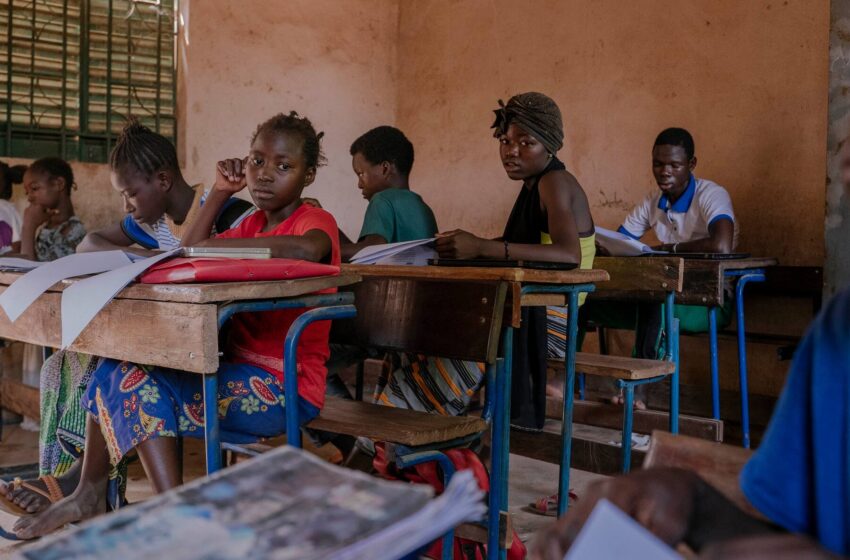
In a major shift for education and cultural identity, Mali has begun using artificial intelligence to help school children learn reading and writing in Bambara. This marks a turning point after decades of schooling predominantly in French. The initiative aims to give students access to textbooks in a language they already speak at home, transforming classrooms and restoring the value of local languages.
From French-only classrooms to Bambara stories
Since Mali adopted a new constitution in 2023, the country now recognises 13 official languages. Although French is no longer among those official languages, it remains dominant in classrooms across Mali. Thus, many children attend school in a language they do not speak at home.
To challenge that, the Education Ministry partnered with a local AI firm, RobotsMali. The firm has produced more than one hundred illustrated stories in Bambara — the most widely spoken language in Mali. These stories are now used in schools, allowing children to read and write in a language familiar to them.
One 13-year-old student said the effort helps her speak more confidently with friends. She emphasised that at school they used to speak only French, which often felt distant. Another 17-year-old student said “Bambara is our language,” stressing the need to prioritise native languages in education.
AI tools bridging the resource gap
To create the new materials, RobotsMali relies on generative AI tools such as ChatGPT and other image-generation programs. These tools write, translate, and illustrate stories in Bambara. Because the texts are illustrated, students can quickly link words to meaning — a crucial aid in early reading and writing lessons.
This approach addresses a long-standing shortage of books written in local languages. Since independence from France in 1960, repeated attempts to replace French with languages such as Bambara failed. The main obstacles were lack of resources and political will. As a result, generations of students have had limited access to schoolbooks in their mother tongues.
Now, thanks to AI, these hurdles are more manageable. Producing local-language materials at scale becomes faster and cheaper. Recognising this, educators and parents view the initiative as a breakthrough.
Cultural pride and reclaiming identity
Beyond practical gains, the move carries deep symbolic value. For many Malians, using Bambara in schools represents reclaiming cultural identity and resisting the lingering dominance of the former colonial language.
Some students expressed pride at the idea of learning in their mother tongue. Others noted the joy of reading stories that reflect their daily lives and culture. For them, school is no longer a space where they feel disconnected from home environment and roots.
The initiative also coincides with broader political changes. After 2020 and 2021 military coups, shifting attitudes shaped national policies. Using local languages now aligns with a growing will to reduce colonial legacy and embrace African identity.
Early results and enthusiastic reception
Early feedback from teachers, parents, and students has been positive. Students reportedly grasp reading and writing more easily in Bambara than in French. Illustrations help them understand context and meaning faster.
Educators highlight improved engagement and comprehension. For many children, reading in a familiar language reduces the intimidation and alienation they often felt when studying in French. Some children who had never attended school before are now learning to read for the first time — and doing so in Bambara.
The initiative also opens the door to broader inclusion. It lowers barriers for children from rural or disadvantaged backgrounds, who often struggle with French. By meeting them where they are — in their mother tongue — the project improves educational access and equity.
Challenges ahead: Sustainability, quality, and expansion
Despite early successes, challenges remain. Producing quality content in Bambara requires careful translation, editing, and illustration to ensure relevance and cultural accuracy. AI tools can help, but human oversight remains critical.
Training teachers to use the new materials effectively is another concern. Many instructors are accustomed to French-language textbooks and may need support to adapt to Bambara materials.
Funding is also a major issue. While AI reduces cost per book, scaling up the program across the country requires resources — for printing, distribution, teacher training, and ongoing content development.
Finally, integration into the national curriculum must be carefully managed. Ensuring that Bambara-based materials align with educational standards and progression remains essential for credibility and long-term adoption.
Why the initiative matters — far beyond literacy
The use of AI to teach children in Bambara is not just about language or education. It touches on identity, inclusion, and social equity. For nations with multiple local languages and colonial legacies, such efforts have the power to reshape generational attitudes toward culture and belonging.
By making school accessible in a familiar language, Mali is helping students feel seen and heard. It also sends a signal that their language, culture, and heritage matter — in classrooms, in literature, and in national policy.
Moreover, the model could inspire other multilingual African countries. Where colonial languages still dominate, AI could help revive local languages, improve literacy, and support cultural preservation.
The Road Ahead: What This Could Become
If successful, the project could lead to:
- Wider distribution of Bambara textbooks across all grades and regions.
- Development of reading clubs and libraries focused on local languages.
- Incorporation of other national languages into AI-generated curricula.
- Improved retention and attendance in rural and underprivileged communities.
- Broader acceptance of local languages in formal education and public life.
Additionally, the initiative could encourage similar efforts across Africa. Countries with linguistic diversity might adopt AI-powered content creation to give voice to languages that were long marginalized.
Conclusion: A Pioneering Fuse of Technology and Heritage
By using AI to teach school children in Bambara, Mali embarks on a bold educational and cultural experiment. The move promises to make learning more accessible, more relevant, and more inclusive. It also reflects a deeper desire to reclaim linguistic identity post-colonialism.
While challenges remain — around resources, training, and scale — the early results bring hope. As more children learn to read and write in their mother tongue, the project offers a glimpse of a future where language is not a barrier but a bridge.
In this context, the decision to have “Mali uses AI to teach school children in Bambara” is more than a headline. It is a statement of identity, a step toward equality, and a launchpad for a new generation of African learners.