

Mali conflict survivors recount sexual violence and killings blamed on Russia’s Africa Corps
- Health Mali News
OurDailyAfrica Reporter
- 0
- 6 minutes read
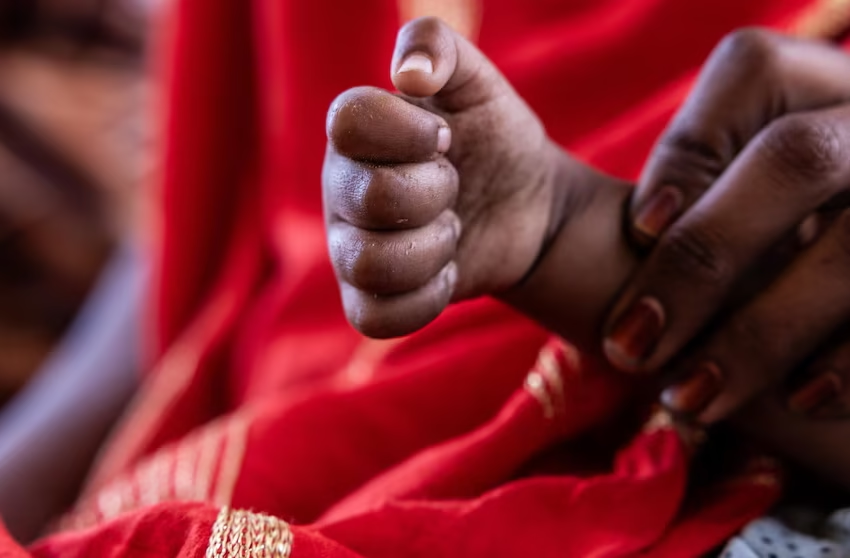
Survivors of Mali’s long-running conflict have come forward with disturbing testimonies of sexual violence, killings and other severe abuses they say were committed by fighters linked to Russia’s Africa Corps. The accounts, shared by refugees now sheltering outside Mali, describe a pattern of brutality that has left deep physical and psychological scars on civilians.
The allegations raise renewed concerns about the conduct of foreign forces involved in Mali’s security operations and the growing humanitarian toll of the conflict.
Refugees describe brutal attacks on civilians
Several survivors recounted how armed men entered villages in northern Mali, attacking residents without warning. Families described executions, beheadings and the destruction of homes. Some said relatives were killed in front of them, leaving survivors traumatized and fearful of returning home.
Women and girls were among the most vulnerable. Refugees reported cases of rape and sexual assault, including attacks on minors. Victims were often left without medical care and forced to flee immediately after the assaults, worsening their injuries and trauma.
Aid workers supporting displaced families say such cases are likely underreported due to stigma, fear of retaliation and cultural pressures that discourage survivors from speaking openly.
Allegations linked to Africa Corps fighters
According to survivors, some of the attackers were foreign fighters believed to be connected to Russia’s Africa Corps, a military unit that replaced the Wagner Group earlier in the year. Witnesses described fighters speaking foreign languages and operating alongside Malian forces during operations against armed groups.
Although Africa Corps was presented as a restructuring of foreign military support, human rights observers say the allegations mirror past reports of abuses linked to Wagner fighters. Survivors say the change in name has not stopped violence against civilians.
Authorities in Mali have not publicly acknowledged responsibility for the alleged abuses, and there has been limited transparency regarding the role and accountability of foreign forces operating in the country.
Sexual violence remains widely underreported
Humanitarian organizations warn that sexual violence in Mali’s conflict zones is far more widespread than official figures suggest. Survivors often avoid reporting attacks due to shame, fear of social rejection, or concern that perpetrators will not be punished.
Medical staff working with refugees say many victims arrive with untreated injuries, infections and severe psychological distress. Children who experience violence are particularly vulnerable, with long-term impacts on their physical and emotional development.
Despite international laws prohibiting sexual violence in conflict, accountability remains rare, especially in remote areas where access for investigators is limited.
Growing displacement and humanitarian crisis
The conflict in Mali has displaced hundreds of thousands of people over the past decade. Many have fled to neighboring countries, where they live in overcrowded camps with limited access to food, healthcare and education.
Refugees say fear of renewed attacks prevents them from returning home. Entire communities have been emptied as violence spreads across rural areas, disrupting livelihoods and weakening social structures.
Aid agencies warn that without increased humanitarian assistance, conditions for displaced families will continue to deteriorate.
Calls for accountability and protection
Human rights groups are calling for independent investigations into the alleged abuses and stronger protections for civilians. They stress that all parties involved in the conflict — including foreign military forces — must be held accountable for violations of international law.
Advocates also urge greater support for survivors of sexual violence, including medical care, counseling and legal assistance. Without justice and rehabilitation, many victims risk being forgotten in a conflict that shows no clear end.
Conclusion
The testimonies of Mali conflict survivors highlight the devastating human cost of ongoing violence and the dangers faced by civilians caught between armed groups and military operations. Allegations of sexual violence and killings linked to Russia’s Africa Corps have intensified demands for transparency, accountability and international scrutiny.
As the conflict continues, survivors say peace will remain out of reach unless the suffering of civilians is acknowledged — and those responsible for abuses are brought to justice.