
Gaza Residents Mark Ramadan Amid Food Shortages as Humanitarian Crisis Worsens
- Egypt
OurDailyAfrica Reporter
- 0
- 12 minutes read
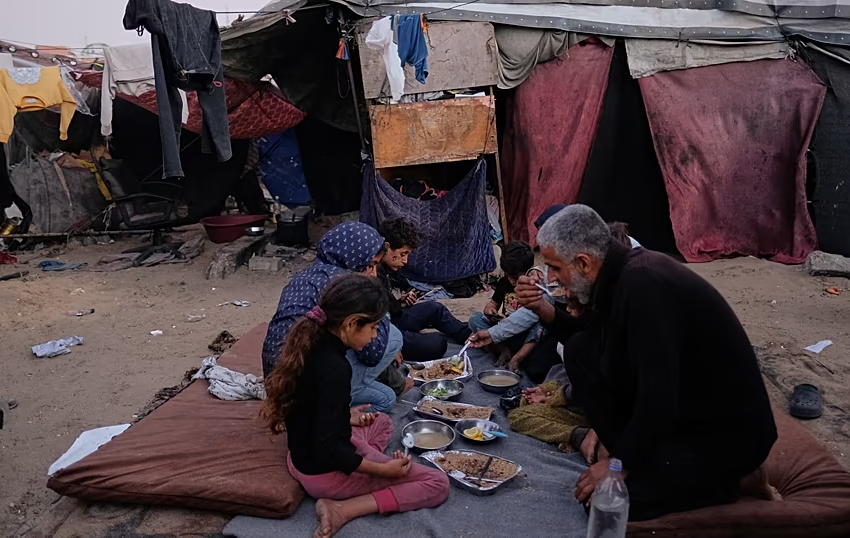
Gaza residents mark Ramadan amid food shortages as thousands of families struggle to observe the holy month under severe humanitarian conditions. Instead of traditional celebrations, many households now face hunger, displacement, and uncertainty. The contrast between past Ramadans and the present situation highlights the depth of the crisis affecting the territory.
Despite the hardships, residents continue observing Ramadan with determination. Families gather at sunset to break their fast with limited meals. However, food scarcity has forced many households to reduce portions and change long-standing traditions. As a result, what is usually a joyful period has become a time of endurance and survival.
The situation reflects the broader humanitarian challenges facing Gaza. Years of conflict and economic disruption have weakened supply systems. Consequently, many residents now depend on aid or small food supplies to survive.
Why Gaza Residents Mark Ramadan Amid Food Shortages Reflects a Deepening Crisis
When Gaza residents mark Ramadan amid food shortages, the difficulties become visible across communities. Normally, Ramadan brings families together for shared meals and prayers. Markets typically remain busy as households prepare special dishes for evening gatherings.
However, the current situation has changed these patterns. Many families now struggle to obtain basic food items. Instead of traditional meals, households often prepare simple dishes made from whatever ingredients are available.
Furthermore, limited purchasing power has made food less affordable. Many residents cannot buy enough supplies for the entire month. Therefore, families must carefully manage small food stocks.
At the same time, fasting becomes more difficult when meals remain limited. Many residents face hunger even after breaking their fast. Nevertheless, religious devotion continues to guide daily routines.
Food Shortages Affect Daily Life
Food shortages remain the most serious challenge facing residents. Many households cannot secure consistent access to essential items such as rice, flour, and vegetables. As a result, families must reduce meal sizes and eat simpler foods.
Traditional Ramadan meals usually include several dishes. However, many families now prepare only one basic meal each evening. Some households share small portions among several family members.
Moreover, rising prices have reduced purchasing power. Even when food appears in local markets, many residents cannot afford it. Therefore, shortages affect both availability and accessibility.
Families often worry about future supplies. Uncertainty about food availability creates daily stress. Parents especially worry about feeding their children.
Despite these concerns, families continue gathering for iftar each evening. Even modest meals help preserve a sense of normal life.
Displacement Makes Ramadan More Difficult
Large numbers of residents remain displaced from their homes. Many families now live in temporary shelters or crowded spaces. These conditions make daily life more challenging.
Cooking facilities often remain limited. Some families share small stoves or cooking areas. Others rely on prepared meals or donated food.
Fuel shortages also complicate meal preparation. Without sufficient fuel, cooking becomes difficult. Therefore, families must adapt to whatever resources they have.
Ramadan traditions have changed under these conditions. Instead of large family gatherings, many residents share small meals in cramped spaces. However, families still try to maintain spiritual practices.
Evening prayers continue whenever possible. Community members support each other during difficult times. As a result, Ramadan still brings moments of unity.
Aid and Community Support
Humanitarian assistance plays an essential role in supporting residents. Many families depend on food distributions to survive. Aid programs provide essential supplies such as flour and basic ingredients.
However, demand often exceeds available resources. Some households receive limited rations that last only a short time. Therefore, uncertainty remains a constant concern.
Local communities also provide support. Neighbours sometimes share food with families in greater need. Volunteers help distribute supplies and assist vulnerable residents.
These acts of solidarity strengthen community bonds. During Ramadan, sharing food carries special meaning. Therefore, even small gestures make a difference.
Although aid cannot solve all problems, it provides critical relief.
Changes to Ramadan Traditions
Before the crisis, Ramadan celebrations filled the streets with activity. Markets stayed open late into the night. Families decorated their homes and prepared large meals.
Today, many of these traditions have disappeared.
Instead of festive shopping, families focus on securing basic supplies. Decorations and celebrations have become rare. Social gatherings remain limited because of difficult conditions.
Nevertheless, residents continue preserving important customs. Families still gather at sunset to break their fast. Parents teach children about Ramadan traditions despite current hardships.
Communities also organise small gatherings whenever possible. These moments provide emotional comfort.
Therefore, Ramadan continues to hold deep meaning even during crisis.
Emotional Impact on Families
The humanitarian situation has created emotional stress for many families. Parents often feel pressure to provide enough food. Uncertainty about the future increases anxiety.
Ramadan usually brings comfort and happiness. However, current conditions often remind families of what they have lost. Many residents remember past celebrations when life felt more stable.
These memories sometimes deepen feelings of hardship. Still, faith provides strength during difficult times.
Prayer and fasting help many residents remain hopeful. Spiritual devotion encourages resilience. Families draw strength from shared belief and tradition.
Community support also reduces feelings of isolation. Helping one another creates a sense of belonging.
The Wider Humanitarian Situation
Food shortages reflect a larger crisis affecting Gaza. Supply disruptions have limited access to essential goods. Infrastructure damage has complicated food distribution.
Many residents now live with long-term economic hardship. Job opportunities remain limited. Therefore, households depend heavily on assistance.
The humanitarian situation affects nearly every aspect of life. Health services, education, and economic activity have all faced disruptions.
Ramadan arrives at a time when many families already struggle to meet daily needs. Consequently, the holy month highlights the severity of the situation.
Hope for Better Conditions
Despite the challenges, many residents remain hopeful. Families hope conditions will improve in the future. Many people want to rebuild their homes and restore normal life.
Recovery will require sustained support and stability. Improved supply systems could ease shortages. Economic recovery would also improve living conditions.
When Gaza residents mark Ramadan amid food shortages, they demonstrate resilience and determination. Their ability to maintain traditions under hardship reflects strong community values.
Residents continue adapting to difficult conditions while hoping for change.
Conclusion
Gaza residents mark Ramadan amid food shortages during one of the most difficult periods in recent years. Hunger, displacement, and limited supplies have transformed traditional celebrations into acts of endurance.
Despite these challenges, residents continue observing Ramadan with commitment and faith. Families gather for simple meals and maintain spiritual traditions even in difficult conditions.
Food insecurity remains a serious concern. However, community support and religious devotion provide strength.
The resilience shown by Gaza residents highlights the importance of hope during crisis. Even amid shortages, Ramadan continues to unite families and communities.