
WHY FIFA Sanctions Nigeria and DR Congo Over World Cup Play-Off Infractions
- News Nigeria Sport
OurDailyAfrica Reporter
- 0
- 15 minutes read
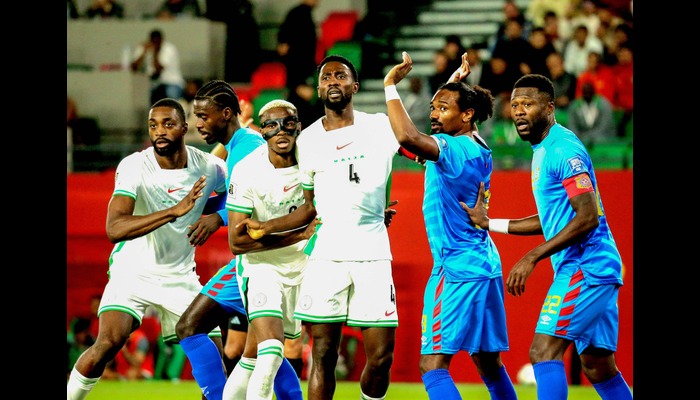
World football governing body FIFA has sanctioned Nigeria and the Democratic Republic of Congo following disciplinary violations during their World Cup qualifying play-off.
The sanctions followed incidents involving crowd behaviour and stadium misconduct during the high-stakes match. The fixture formed part of the qualification pathway for the upcoming global tournament.
According to FIFA’s disciplinary committee, both football associations breached regulations that govern safety and conduct during international matches.
Although the penalties were financial, the decision highlights FIFA’s commitment to maintaining discipline in world football.
FIFA Sanctions Nigeria and DR Congo After Play-Off Match
The FIFA sanctions Nigeria and DR Congo ruling came after a detailed investigation into the match events. Officials reviewed reports from referees, security officers, and match commissioners.
During the play-off encounter, both teams competed for a chance to remain in the qualification race for the next World Cup.
However, incidents involving supporters triggered disciplinary reviews shortly after the game ended.
FIFA concluded that actions by fans from both sides violated its stadium conduct rules.
As a result, the global football authority imposed separate fines on the two football federations.
Nigeria Penalised for Crowd Misconduct
Nigeria received a financial penalty after supporters threw objects onto the field during the match.
According to FIFA’s disciplinary code, throwing objects during a football match threatens safety and order.
Therefore, the Nigerian football authority was held responsible for the behaviour of spectators inside the stadium.
Although the fine was relatively small, the sanction serves as an official warning.
Football governing bodies must ensure that fans respect match regulations.
Supporters play an important role in football culture. However, their actions must never endanger players or officials.
DR Congo Sanctioned Over Laser Pointer Incident
The Democratic Republic of Congo faced a larger fine due to another incident involving supporters.
During the match, some fans reportedly used laser pointers directed at players on the pitch.
Such devices can disrupt players and affect their concentration.
More importantly, FIFA classifies the use of laser pointers as a prohibited action during football matches.
Consequently, the Congolese football federation received a heavier sanction compared with Nigeria.
The decision reinforces FIFA’s strict stance against actions that may interfere with fair competition.
Importance of Discipline in International Football
Football matches attract passionate supporters across the world. However, maintaining order remains essential for the safety of everyone involved.
FIFA regularly reminds national associations about their responsibility to manage stadium behaviour.
Supporters must respect both players and officials during matches.
Whenever violations occur, the governing body can apply disciplinary measures.
These measures may include fines, stadium bans, or even points deductions in extreme cases.
In this situation, FIFA determined that financial penalties were appropriate.
Nevertheless, repeated offences could result in stricter sanctions in the future.
Background of the World Cup Qualification Play-Off
The controversial match formed part of the qualification pathway for the upcoming 2026 FIFA World Cup.
The tournament will take place in North America and will feature an expanded format.
For the first time in history, 48 teams will compete in the global competition.
This expansion created additional qualification opportunities for many national teams.
However, competition remains intense across every continent.
African teams must pass through several qualification rounds before securing a place.
The Nigeria versus DR Congo play-off represented one of those crucial stages.
Match Outcome and Controversies
The encounter between the two national teams produced intense competition.
Both teams fought strongly in pursuit of a place in the next qualification stage.
The match eventually ended in a dramatic penalty shootout.
DR Congo secured victory after the shootout and advanced further in the qualification process.
However, controversy soon followed the match.
Incidents involving crowd behaviour and supporter misconduct became key topics of discussion.
These reports eventually prompted FIFA to open disciplinary proceedings.
Nigeria’s World Cup Qualification Setback
The defeat represented a major setback for the Nigerian national team.
Nigeria has traditionally been one of Africa’s strongest football nations.
The country has produced talented players who compete in major international leagues.
Despite these strengths, the play-off loss ended Nigeria’s immediate qualification hopes.
Nevertheless, football officials in the country continue working on future development plans.
Improving grassroots football and youth development remains a national priority.
DR Congo’s Continued Qualification Journey
Following the victory, the Democratic Republic of Congo moved forward in the qualification pathway.
The team now aims to secure a place in the expanded World Cup tournament.
For DR Congo, the progress represents an opportunity to return to the global football stage.
The country has a proud football history and has produced many talented players.
Therefore, supporters remain hopeful that the team can reach the tournament.
However, the disciplinary sanction serves as a reminder of the importance of maintaining order during matches.
FIFA’s Role in Global Football Governance
FIFA oversees international football competitions and sets the rules that govern the sport.
The organization enforces disciplinary regulations to protect players, officials, and spectators.
Whenever incidents occur during matches, FIFA reviews official reports and video evidence.
The disciplinary committee then evaluates whether rules were violated.
Sanctions depend on the seriousness of the offence.
In some cases, fines are sufficient.
In more serious cases, teams may face stadium bans or competition penalties.
Through these measures, FIFA aims to promote fair play and safe sporting environments.
Lessons for Football Authorities
The sanctions against Nigeria and DR Congo highlight the responsibility of national football associations.
Football federations must work closely with stadium authorities and security personnel.
Together, they must ensure that supporters behave responsibly during matches.
Clear stadium regulations, effective security checks, and strong communication can prevent many incidents.
Education campaigns may also help supporters understand acceptable behaviour.
When fans respect the rules, football matches become safer and more enjoyable.
Looking Ahead to the 2026 World Cup
As qualification continues around the world, many teams still dream of reaching the global tournament.
The 2026 FIFA World Cup will mark a historic expansion of international football.
The event will take place across three host countries.
Millions of fans will follow the tournament both in stadiums and through global broadcasts.
African teams continue fighting through a demanding qualification process.
For some nations, the journey will bring success.
For others, the experience will offer lessons for future competitions.
Conclusion
The decision by FIFA to sanction Nigeria and DR Congo demonstrates the organization’s commitment to discipline in international football.
Nigeria received a fine due to crowd misconduct, while DR Congo faced a heavier penalty for the use of laser pointers.
Although the sanctions were financial, they highlight the importance of maintaining order and safety during matches.
Football remains a powerful global sport that brings nations together.
However, respect for the rules remains essential for the integrity of the game.