

Fẹ́lá Aníkúlápó Kuti: The Revolutionary Voice of Africa
- History News Nigeria
OurDailyAfrica Reporter
- 0
- 6 minutes read
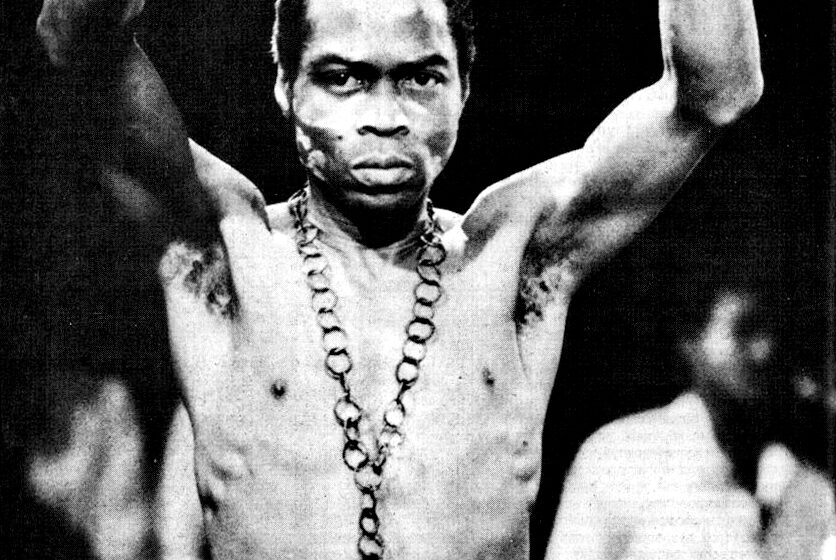
Fẹ́lá Aníkúlápó Kuti stands as one of Africa’s most influential cultural figures of the 20th century. He was more than a musician. He was a political activist, social critic, Pan-Africanist, and fearless voice against oppression. Through his music and personal philosophy, Fẹ́lá challenged authoritarian power, colonial legacies, and social injustice, leaving an enduring mark on African and global culture.
Early life and education
Fẹ́lá Aníkúlápó Kuti was born on October 15, 1938, in Abeokuta, Nigeria, into an intellectually vibrant and politically active family. His mother, Funmilayo Ransome-Kuti, was a renowned feminist, educator, and nationalist who fought colonial rule and traditional patriarchy. His father, Reverend Israel Ransome-Kuti, was an Anglican minister and school principal.
Initially trained in classical music, Fẹ́lá studied trumpet and composition in London. However, his exposure to jazz, African rhythms, and later Black political movements reshaped his musical direction and worldview. A defining moment came during his travels to the United States, where he encountered Black Power ideology and became deeply influenced by African-American political thought.
Birth of Afrobeat
Fẹ́lá pioneered Afrobeat, a revolutionary musical genre that fused traditional Yoruba rhythms with jazz, funk, highlife, and spoken political commentary. Afrobeat was not designed for entertainment alone. It was a tool for resistance and education.
His songs were long, complex, and hypnotic, often stretching beyond ten minutes. They featured powerful horn sections, polyrhythmic percussion, and repetitive grooves that created a trance-like intensity. Above all, Fẹ́lá’s lyrics confronted corruption, military dictatorship, colonial mentality, and social hypocrisy.
Music as political weapon
Unlike many artists of his time, Fẹ́lá openly challenged Nigeria’s military governments. His music named names, mocked authority, and exposed systemic abuse. Songs like Zombie, Coffin for Head of State, and Sorrow, Tears and Blood directly criticized the brutality and incompetence of the ruling elite.
As a result, Fẹ́lá became a constant target of state repression. His commune, the Kalakuta Republic, was repeatedly raided. He was arrested, beaten, and imprisoned multiple times. In one of the most violent attacks, soldiers burned Kalakuta to the ground and threw his mother from a window, leading to injuries that later caused her death.
Despite the violence, Fẹ́lá never retreated. Instead, he became more defiant.
Philosophy and identity
Fẹ́lá rejected Western cultural dominance and promoted African self-identity. He encouraged Africans to reclaim their history, languages, and traditions. His adoption of the name “Aníkúlápó”, meaning “the one who carries death in his pouch”, symbolized his belief that he controlled his destiny and feared no authority.
He also challenged conventional morality and social norms. His lifestyle was controversial, but always intentional. For Fẹ́lá, freedom was not selective. It had to be total.
Global influence and legacy
Fẹ́lá Aníkúlápó Kuti died in 1997, but his influence has only grown stronger. Afrobeat continues to inspire musicians across Africa and the world. His children, including Femi Kuti and Seun Kuti, have carried forward his musical and political legacy.
Beyond music, Fẹ́lá’s ideas resonate in global movements for justice, free expression, and cultural pride. His life demonstrates the power of art as resistance and the cost of speaking truth to power.
Today, Fẹ́lá is remembered not just as a Nigerian icon, but as a global symbol of fearless resistance.
Conclusion
Fẹ́lá Aníkúlápó Kuti was a revolutionary in sound and spirit. He used music to confront injustice, awaken consciousness, and challenge systems of power. His life remains a reminder that art can be dangerous, transformative, and deeply political.
He did not seek comfort or approval. He sought truth.
And in doing so, he changed history.