

Ethiopia’s President Selassie Welcomes Israel’s President Herzog for Talks on Strengthening Bilateral Relations
- Ethopia News
OurDailyAfrica Reporter
- 0
- 13 minutes read
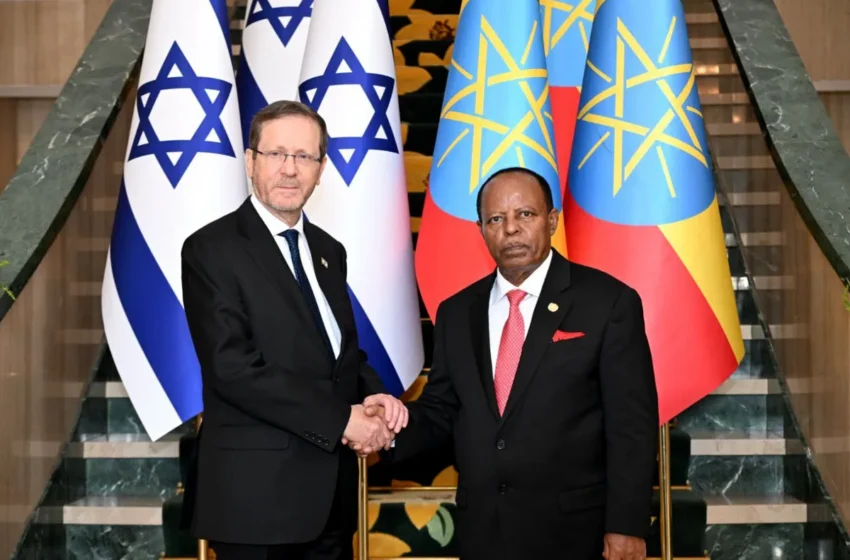
Ethiopia’s President Selassie welcomes Israel’s President Herzog for talks on strengthening bilateral relations, signalling a renewed diplomatic push between the two nations. The visit by Israel’s head of state to Addis Ababa focused on deepening political and diplomatic ties and broadening cooperation across areas of mutual interest.
President Isaac Herzog arrived in the Ethiopian capital for a two-day visit, where he was officially welcomed by President Taye Atske Selassie at the Presidential Palace. The meeting highlighted long-standing historical connections between the countries and reinforced shared goals for future collaboration.
Discussions also included Ethiopia’s support for a peaceful resolution to the Middle East conflict and a reiteration of Ethiopia’s commitment to a two-state solution. The visit underscores both nations’ desire to build stronger strategic partnerships in the Horn of Africa and beyond.
Why Ethiopia’s President Selassie Welcomes Israel’s President Herzog for Talks on Strengthening Bilateral Relations Matters
The decision that Ethiopia’s President Selassie welcomes Israel’s President Herzog for talks on strengthening bilateral relations reflects a broader diplomatic strategy. Both governments see value in expanding cooperation in political, economic, and regional security spheres.
For Ethiopia, the visit comes at a time of evolving regional dynamics in the Horn of Africa. Addis Ababa holds strategic importance due to its population size, economic potential, and influential role within regional organisations. The government is seeking partnerships that support development goals and enhance diplomatic influence.
Meanwhile, Israel aims to reaffirm and broaden its ties across Africa after periods of tension in various continental capitals. Strengthening these ties aligns with Israel’s broader diplomatic priorities and outreach efforts.
During the talks, Ethiopian leaders emphasised their support for peaceful international solutions, including a negotiated settlement between Israelis and Palestinians. President Selassie reiterated Ethiopia’s support for a two-state solution, describing it as the most viable path toward lasting peace.
Historical and Cultural Ties
The relationship between Ethiopia and Israel dates back many decades. These ties have been reinforced by the presence of an Ethiopian Jewish community in Israel, which both leaders described as a living bridge between their societies. This community has contributed culturally, socially, and economically to both nations.
President Herzog expressed his appreciation for this community and highlighted its role in strengthening people-to-people connections. He also pointed to shared historical experiences and mutual respect as foundations for deepening cooperation.
Ethiopia’s leadership, for its part, welcomed the recognition of these ties. They noted that cultural and historical connections could serve as a springboard for wider diplomatic engagement.
Consequently, the meeting carried symbolic as well as political significance. It showcased an ongoing commitment to forging closer relations.
Focus on Political and Diplomatic Cooperation
At the core of the discussions was the goal of strengthening political and diplomatic cooperation. Both leaders highlighted opportunities to expand collaboration in areas where mutual benefit exists.
Political cooperation can help both countries navigate regional challenges. Ethiopia, given its role in regional peace efforts, sought to assure its partners of stability and shared interests.
Herzog’s visit underscored Israel’s willingness to engage with key African partners on issues of common concern. As diplomatic relations evolve, Ethiopia could become an even more significant partner for Israel on the continent.
In addition to political ties, both sides expressed interest in exploring economic and technological cooperation. Although no specific agreements were announced, leaders indicated they would pursue opportunities in innovation, science, and development.
Remarks from Ethiopian Leaders
President Taye Atske Selassie emphasised Ethiopia’s consistent support for peace efforts in the Middle East. During the talks, he restated the nation’s endorsement of a two-state solution as a framework for resolving longstanding disputes.
By backing this position, Ethiopia aligns itself with a diplomatic approach that seeks peaceful coexistence and mutual recognition. This stance may also appeal to other African states that seek balanced engagement on international issues.
Through these discussions, Ethiopian leaders signalled their desire to play a constructive role in global diplomacy while strengthening ties with strategic partners.
Comments from President Herzog
President Isaac Herzog underscored the importance of the historical relationship between Israel and Ethiopia. He expressed appreciation for the hospitality extended to him and described the talks as productive.
Herzog noted that Ethiopia holds special significance for Israel and remains a key partner on the African continent. According to him, the two countries share many areas of common interest, and expanding collaboration could create new opportunities.
He also highlighted the strategic importance of reinforcing diplomatic relations in a shifting geopolitical landscape. Strengthened ties, he argued, would benefit both nations and support stability in the broader region.
Engagement with Ethiopian Leadership
Beyond the presidential meeting, President Herzog held talks with other senior Ethiopian leaders, including Prime Minister Abiy Ahmed. These discussions focused on ways to enhance cooperation in areas such as innovation, science, agriculture, and regional security.
Prime Minister Abiy described the meetings as productive and emphasised the importance of maintaining open dialogue on matters of mutual concern. He expressed optimism about future collaboration and highlighted the potential benefits of stronger ties.
Such engagements suggest that both leaders see room for broadening cooperation beyond traditional diplomatic channels. These efforts may encompass educational exchanges, technological collaboration, and joint development initiatives.
Ethiopia’s Strategic Role in the Region
Ethiopia’s geopolitical position makes it a key player in the Horn of Africa. The country’s large population and economic potential give it significant influence in regional affairs. As such, international partnerships remain essential for advancing national interests.
By strengthening ties with Israel, Ethiopia gains access to a partner with expertise in areas like technology, agriculture, and water management. These sectors could support Ethiopia’s development goals and help address domestic challenges.
Additionally, diplomatic engagement with Israel may influence Ethiopia’s wider foreign policy orientation. A balanced approach to international relations could help Addis Ababa navigate complex regional dynamics.
Geopolitical Context and Regional Diplomacy
Herzog’s visit comes amid a broader diplomatic environment in the Horn of Africa. Ethiopia has recently hosted other high-profile foreign dignitaries, indicating its emergence as a critical diplomatic hub.
In recent weeks, the nation welcomed leaders from several countries, each seeking to strengthen bilateral cooperation. These engagements highlight Ethiopia’s growing role in continental and global diplomacy.
The talks between Ethiopia and Israel also occur against the backdrop of shifting alliances and geopolitical competition in the region. As nations seek strategic partnerships, diplomatic visits like Herzog’s may influence future cooperation frameworks.
Shared Interests in Peace and Development
Both Ethiopia and Israel expressed a desire to foster peace and development through strengthened relations. Their discussions reflected shared priorities, including innovation, economic growth, and regional stability.
Although the focus remained on diplomatic ties, leaders hinted at potential collaboration in areas that could benefit their populations. Such cooperation could include technology transfer, capacity building, and joint research initiatives.
These areas represent potential avenues for cooperation that extend beyond government relations to include academia, business, and civil society.
Looking Ahead
The fact that Ethiopia’s President Selassie welcomes Israel’s President Herzog for talks on strengthening bilateral relations sets the stage for continued engagement between the two nations. While immediate agreements were not disclosed, leaders signalled a shared commitment to deeper ties and mutual cooperation.
Future dialogue will likely explore practical ways to translate diplomatic goodwill into meaningful results. These efforts may involve economic partnerships, cultural exchanges, and collaborative initiatives aimed at addressing shared challenges.
For Ethiopia, cultivating international partnerships remains a key priority for its development agenda. For Israel, deepening ties with African nations can enhance diplomatic presence and strategic outreach.
Conclusion
Ethiopia’s President Selassie welcomes Israel’s President Herzog for talks on strengthening bilateral relations, demonstrating a renewed commitment to diplomatic engagement. The visit served as a platform to reaffirm historical ties, explore future cooperation, and highlight shared interests in peace and development.
While challenges remain in global geopolitics, both nations appear poised to build on this dialogue. As diplomatic relations evolve, Ethiopia and Israel may find new opportunities to expand collaboration and support mutual interests.
The visit reflects a broader diplomatic trend that values strategic engagement and cooperation in the 21st century.