
Egypt Rejects Displacement of Palestinians as El-Sissi Pushes Back Against Israeli Proposals
- Egypt News
OurDailyAfrica Reporter
- 0
- 9 minutes read
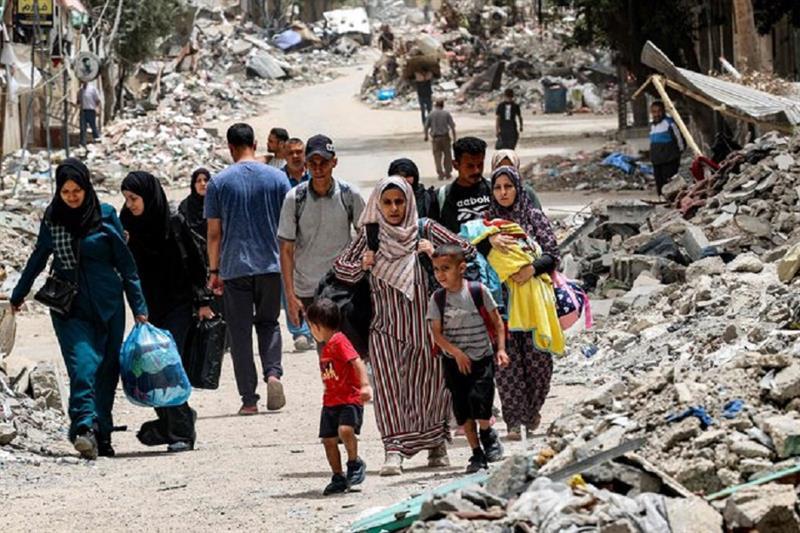
Egypt rejects displacement of Palestinians once again as President Abdel Fattah el-Sissi firmly opposes renewed Israeli efforts to move Gaza’s population out of the territory. His stance reinforces Cairo’s long-standing position that forced relocation would deepen regional instability and permanently undermine the Palestinian cause.
As the war in Gaza continues to reshape Middle East politics, Egypt’s role has become increasingly central. However, Egyptian leaders insist their involvement will not come at the cost of Palestinian rights or regional security.
Egypt Rejects Displacement of Palestinians Amid Escalating Pressure
Egypt rejects displacement of Palestinians despite growing diplomatic pressure and security concerns along its eastern border. Israeli officials have repeatedly floated proposals suggesting the temporary or permanent relocation of Gaza residents, often pointing to Egypt’s Sinai Peninsula as a possible destination.
Cairo has categorically dismissed these ideas. Egyptian authorities argue that displacement would violate international law, fuel long-term conflict, and weaken any future prospects for a two-state solution.
President el-Sissi has consistently emphasized that Gaza’s population must remain on Palestinian land. According to Egyptian officials, removing civilians from Gaza would amount to forced transfer rather than humanitarian relief.
El-Sissi’s Position Reflects Egypt’s Strategic Red Lines
Egypt’s leadership views population transfer as a dangerous precedent. While Cairo has played a key role in humanitarian mediation, it has drawn a firm line against resettlement schemes.
El-Sissi believes that accepting displaced Palestinians could:
- Undermine Palestinian claims to statehood
- Create permanent refugee camps in Sinai
- Destabilize Egypt’s national security
- Shift responsibility away from Israel’s obligations
Therefore, Egypt rejects displacement of Palestinians not only on moral grounds but also as a strategic necessity.
Historical Context Shapes Egypt’s Firm Response
Egypt’s position is deeply shaped by history. Since the 1948 Arab-Israeli war, Palestinian displacement has remained one of the most sensitive issues in the region. Millions of Palestinians continue to live as refugees decades later.
Egyptian officials fear a repeat of history. Once people leave their land, return often becomes impossible. Consequently, Cairo insists that humanitarian aid should flow into Gaza, not that Gaza’s people should be pushed out.
Moreover, Egypt has previously faced security challenges in Sinai. Any mass relocation could inflame tensions and revive instability.
Humanitarian Access Without Population Transfer
Although Egypt rejects displacement of Palestinians, it continues to support humanitarian access into Gaza. Egyptian authorities have facilitated aid deliveries, medical evacuations, and diplomatic talks aimed at reducing civilian suffering.
However, Cairo insists that aid corridors must not become pathways for permanent relocation. Egyptian officials stress that humanitarian relief should reinforce Palestinian resilience rather than erode territorial claims.
This distinction allows Egypt to balance compassion with principle. It also reinforces its image as a regional mediator rather than a participant in forced demographic changes.
Regional and International Reactions
Egypt’s firm stance has drawn mixed reactions. Several Arab states have quietly supported Cairo’s position, viewing it as essential to preserving the Palestinian cause.
Meanwhile, international actors continue to debate solutions for Gaza’s humanitarian crisis. Some Western officials emphasize temporary measures, while Egypt insists that even temporary displacement carries permanent risks.
El-Sissi has used international platforms to restate Egypt’s position clearly. He argues that peace cannot be built on displacement, regardless of how it is framed.
Security Concerns Drive Egypt’s Resistance
Beyond diplomacy, security plays a major role. Egypt has invested heavily in stabilizing Sinai after years of insurgency. Any sudden population movement could strain resources and create new vulnerabilities.
As a result, Egypt rejects displacement of Palestinians to avoid importing a crisis that could spiral beyond control. Egyptian military and intelligence officials reportedly view relocation proposals as a threat to national sovereignty.
Instead, Egypt calls for de-escalation, ceasefires, and renewed political negotiations.
Impact on the Palestinian Cause
From Cairo’s perspective, displacement would weaken Palestinian bargaining power. Once civilians leave Gaza, international pressure to secure their return may fade.
Egyptian officials argue that preserving Palestinian presence is essential for any future peace talks. Without people on the land, political solutions lose meaning.
Therefore, Egypt’s rejection sends a clear message: the Palestinian issue cannot be solved by moving Palestinians elsewhere.
Diplomatic Mediation Remains Egypt’s Preferred Path
Despite firm opposition to displacement, Egypt remains engaged diplomatically. Cairo continues to mediate between regional actors, pushing for ceasefires and humanitarian pauses.
El-Sissi’s government believes diplomacy, not demographic change, offers the only sustainable path forward. Egypt has urged global powers to focus on ending violence rather than redrawing population maps.
This approach allows Egypt to maintain regional influence while defending core principles.
What Comes Next for Gaza and Egypt
As the conflict evolves, pressure on Egypt is unlikely to ease. However, Cairo’s leadership shows no sign of shifting its stance.
Egypt rejects displacement of Palestinians as a matter of principle, security, and historical responsibility. El-Sissi’s position signals that any future solution must keep Palestinians on their land while addressing humanitarian needs.
Ultimately, Egypt’s message is consistent and clear: peace cannot be built by removing people from their homes.