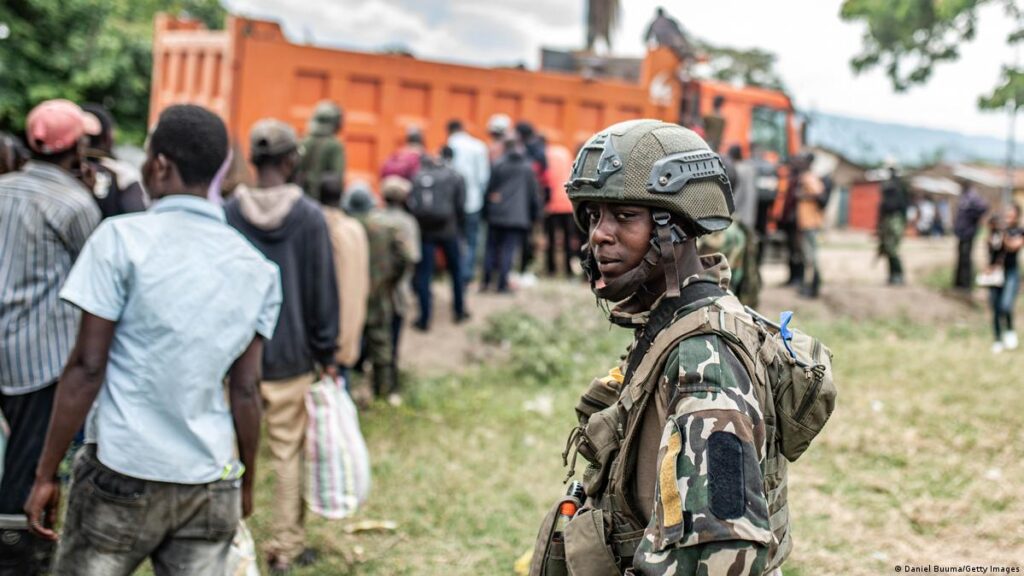

Families Mourn Victims of Congo Mine Collapse as Search for Survivors Continues
- Dr congo
OurDailyAfrica Reporter
- 0
- 12 minutes read
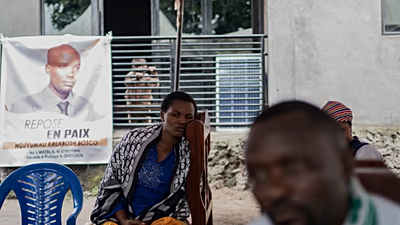
Congo Mine Collapse Leaves Communities in Mourning
The Congo mine collapse in eastern Democratic Republic of Congo has left families devastated as rescue teams continue to search for survivors trapped beneath mud and rubble. The disaster struck a coltan mining site near Rubaya after days of heavy rainfall weakened fragile, hand-dug tunnels. Scores of artisanal miners were buried underground, and the death toll is feared to be high, though exact numbers remain uncertain as recovery operations continue.
In nearby communities, grief hangs heavy in the air. Families have gathered to mourn loved ones, many of whom left home that morning expecting to return with food for their households. Instead, their families now face painful uncertainty, waiting for news of missing relatives while grappling with sudden loss.
Families Struggle With Grief and Uncertainty
In neighbourhoods around Goma, relatives of the victims have held vigils, shared memories, and offered comfort to one another. Many families described chaotic scenes following the Congo mine collapse, as local residents rushed to the site to dig through debris with bare hands in desperate attempts to rescue trapped miners.
For widows, parents, and children, the tragedy has created not only emotional trauma but also deep economic hardship. Many of the miners who died were the main providers for their families. With little access to social support, affected households now face immediate concerns about food, shelter, school fees, and healthcare.
Community leaders say the psychological toll is immense. The fear of losing more lives remains as long as recovery efforts continue under unstable ground conditions. At the same time, families cling to hope that some miners may still be found alive.
Dangerous Conditions at Artisanal Mining Sites
The Congo mine collapse has once again highlighted the hazardous conditions faced by artisanal miners across eastern DRC. These miners work in narrow, unsupported tunnels that are often dug by hand without protective equipment, structural reinforcement, or safety oversight.
During the rainy season, saturated soil becomes unstable. Heavy rainfall increases the risk of tunnel failures and landslides, making collapses more likely. Despite these dangers, thousands of people continue to work in such conditions due to poverty, unemployment, and the lack of alternative livelihoods.
Artisanal mining remains one of the few income sources available in many rural areas. For many families, the risk of death is weighed against the certainty of hunger. This harsh reality forces people to return to the mines even after deadly accidents.
Coltan Mining and the Global Supply Chain
The Rubaya mining area is known for coltan, a mineral essential in the production of electronic devices such as smartphones, computers, and other digital technologies. Demand for coltan has increased alongside global growth in technology and digital consumption.
However, the Congo mine collapse exposes the human cost behind global supply chains. While coltan fuels modern innovation, the people who extract it often work in dangerous and unregulated environments. The lack of formal oversight, safety standards, and worker protections leaves miners exposed to fatal risks.
Advocates argue that global industries benefiting from these minerals must take greater responsibility for ensuring ethical sourcing, improved safety standards, and better working conditions throughout the supply chain.
Conflict, Control, and Weak Oversight
Eastern DRC has long been affected by conflict, which has weakened governance and regulation in mining مناطق. Armed groups have exerted control over resource-rich areas, complicating efforts to enforce safety standards or implement formal mining regulations.
The absence of strong state oversight has allowed informal mining operations to flourish. In such environments, safety measures are often ignored, and miners lack access to training, protective equipment, or emergency response systems.
The Congo mine collapse reflects the broader challenge of regulating resource extraction in conflict-affected regions. Without improved security, governance, and institutional capacity, similar tragedies are likely to recur.
Rescue Efforts and Community Response
Following the collapse, local volunteers, community members, and rescue teams mobilised to search for survivors. Recovery efforts have been slow due to unstable ground, heavy mud, and limited equipment. The risk of further collapses has forced rescuers to proceed with caution.
Communities have provided food, water, and support to families waiting near the site. Religious leaders and civil society groups have organised prayers and counselling sessions to help families cope with grief and trauma.
Despite these efforts, many families remain frustrated by the lack of formal emergency response capacity. The Congo mine collapse has exposed gaps in disaster preparedness and response in mining communities, where accidents are frequent but resources are scarce.
The Economic Trap Facing Mining Communities
For many residents, mining represents both a lifeline and a trap. The Congo mine collapse underscores how deeply communities depend on artisanal mining despite its dangers. Limited access to education, skills training, and alternative employment leaves few viable options.
Young men often enter the mines at an early age, seeing it as the fastest way to earn money. Over time, entire families become dependent on mining income. When disasters occur, the social and economic consequences ripple across communities, deepening cycles of poverty and vulnerability.
Breaking this cycle will require long-term investment in alternative livelihoods, education, and local economic development. Without these changes, communities will continue to face the same deadly risks.
Calls for Safer Mining Practices
Human rights advocates and labour organisations have renewed calls for improved safety standards following the Congo mine collapse. They argue for:
- Formalisation of artisanal mining
- Enforcement of basic safety regulations
- Training for miners on risk prevention
- Provision of protective equipment
- Improved monitoring of mining sites
There are also calls for stronger collaboration between government authorities, local communities, and international partners to address the structural drivers of unsafe mining practices.
A National and Regional Wake-Up Call
The Congo mine collapse is not an isolated incident. Similar disasters have occurred in mining regions across central and western Africa, often with devastating loss of life. These repeated tragedies highlight the urgent need for comprehensive reforms in how artisanal mining is regulated and supported.
For policymakers, the disaster serves as a wake-up call to prioritise mine safety, strengthen governance, and protect vulnerable workers. For the international community, it raises difficult questions about responsibility within global mineral supply chains.
Looking Ahead: Preventing Future Tragedies
Preventing another Congo mine collapse will require more than emergency responses. Long-term solutions must address the root causes of unsafe mining, including poverty, unemployment, weak regulation, and conflict.
Key priorities include:
- Creating alternative livelihoods in mining communities
- Investing in local infrastructure and education
- Strengthening regulatory institutions
- Promoting responsible mineral sourcing
- Supporting community-led safety initiatives
As families continue to mourn and search for missing loved ones, the tragedy stands as a stark reminder of the human cost behind everyday technologies and the urgent need for safer, more humane approaches to resource extraction.