

At least 20 dead, many missing after Congo boat capsize
- News Rwanda
OurDailyAfrica Reporter
- 0
- 3 minutes read
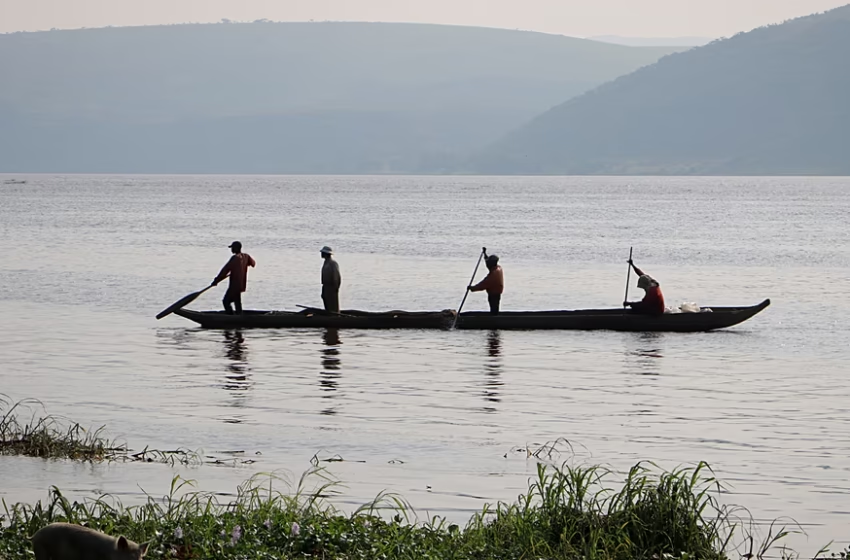
On the night of Thursday, a river boat traveling from the village of Kiri toward the capital, Kinshasa, capsized on Lake Maï-Ndombe in northwestern Congo. Eyewitnesses report the vessel went down between the villages of Bobeni and Lobeke at roughly 8:00 p.m. The boat was transporting a large number of passengers — including a newly ordained Catholic deacon.
By Saturday, residents and authorities confirmed that at least 20 bodies had been recovered, while a number of passengers remained unaccounted for. Provincial authorities sent rescue and recovery teams to the accident site, but the final toll remains uncertain.
Recurring risks on Congo’s waterways and common causes
River transport remains the main mode of travel across remote and forested regions of Congo, especially where roads are scarce or nonexistent. In many cases, wooden vessels — often aged and poorly maintained — carry more passengers and cargo than they safely should.
Overloading is frequent, life jackets are seldom provided, and many trips occur at night. These conditions make navigation hazardous and greatly complicate rescue operations in the event of an accident.
This recent tragedy is not isolated. Just earlier this month, another boat disaster in the same region left dozens missing. And in September, two separate accidents together claimed at least 193 lives, underscoring a long-standing pattern of lethal boat disasters.
The human cost and urgent need for action
The loss of at least 20 lives — including a young deacon — is a harsh reminder of the danger that routine travel along rivers can pose. Families of victims now face grief combined with uncertainty, as some loved ones remain missing.
Local communities, rescue teams, and civil-society voices are calling for stronger enforcement of maritime safety standards. Measures include enforcing capacity limits, mandating life jackets, improving vessel maintenance, and restricting night travel on inland waterways.
Without swift reforms and consistent enforcement, countless more lives remain at risk whenever people board overcrowded or unsafe boats.